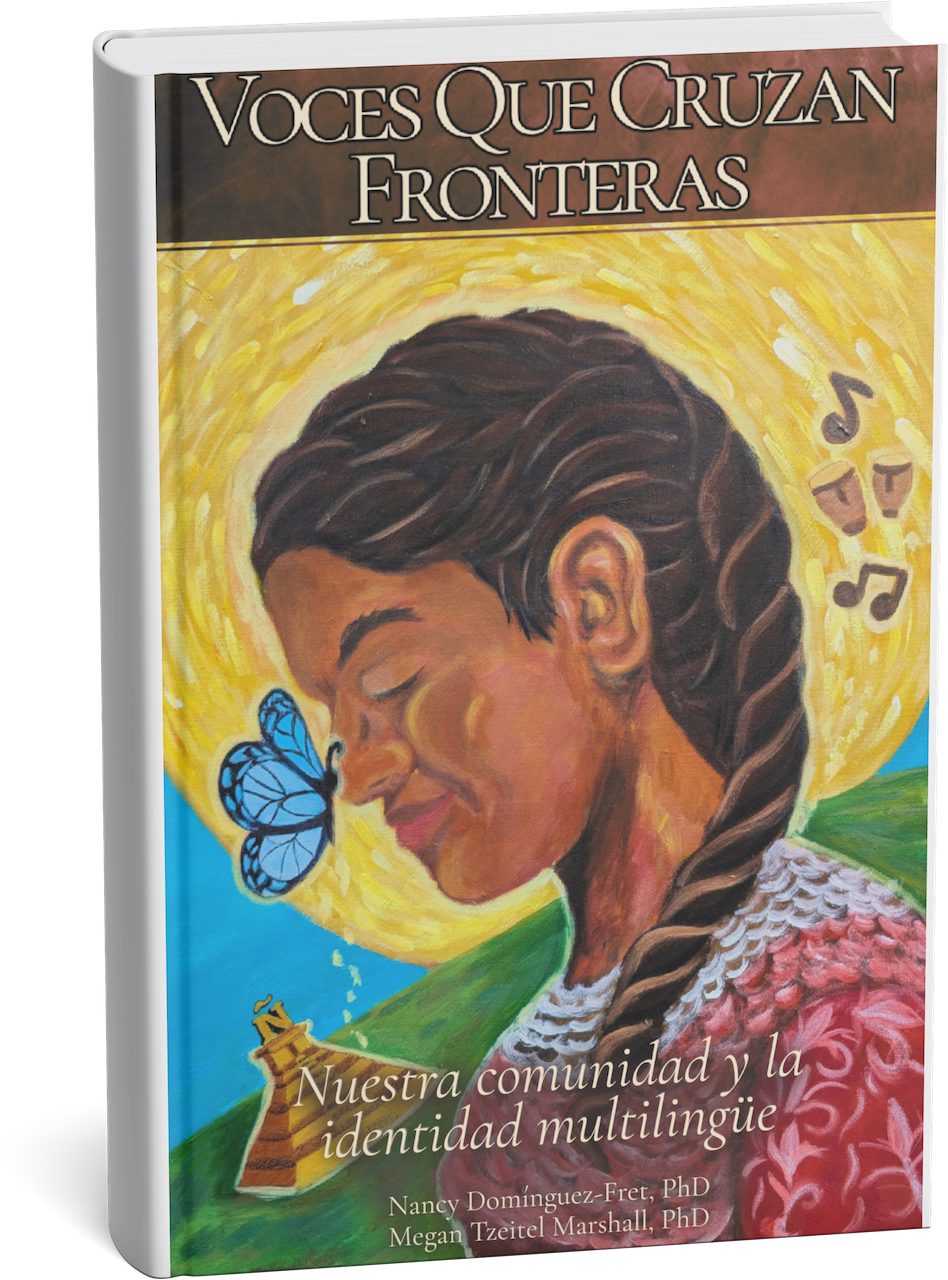
Voces que cruzan fronteras
A FREE two-part textbook for Spanish heritage speakers that will help strengthen Spanish literacy and linguistic confidence while encouraging students to explore their heritage, identity, and relationship with the Spanish language.
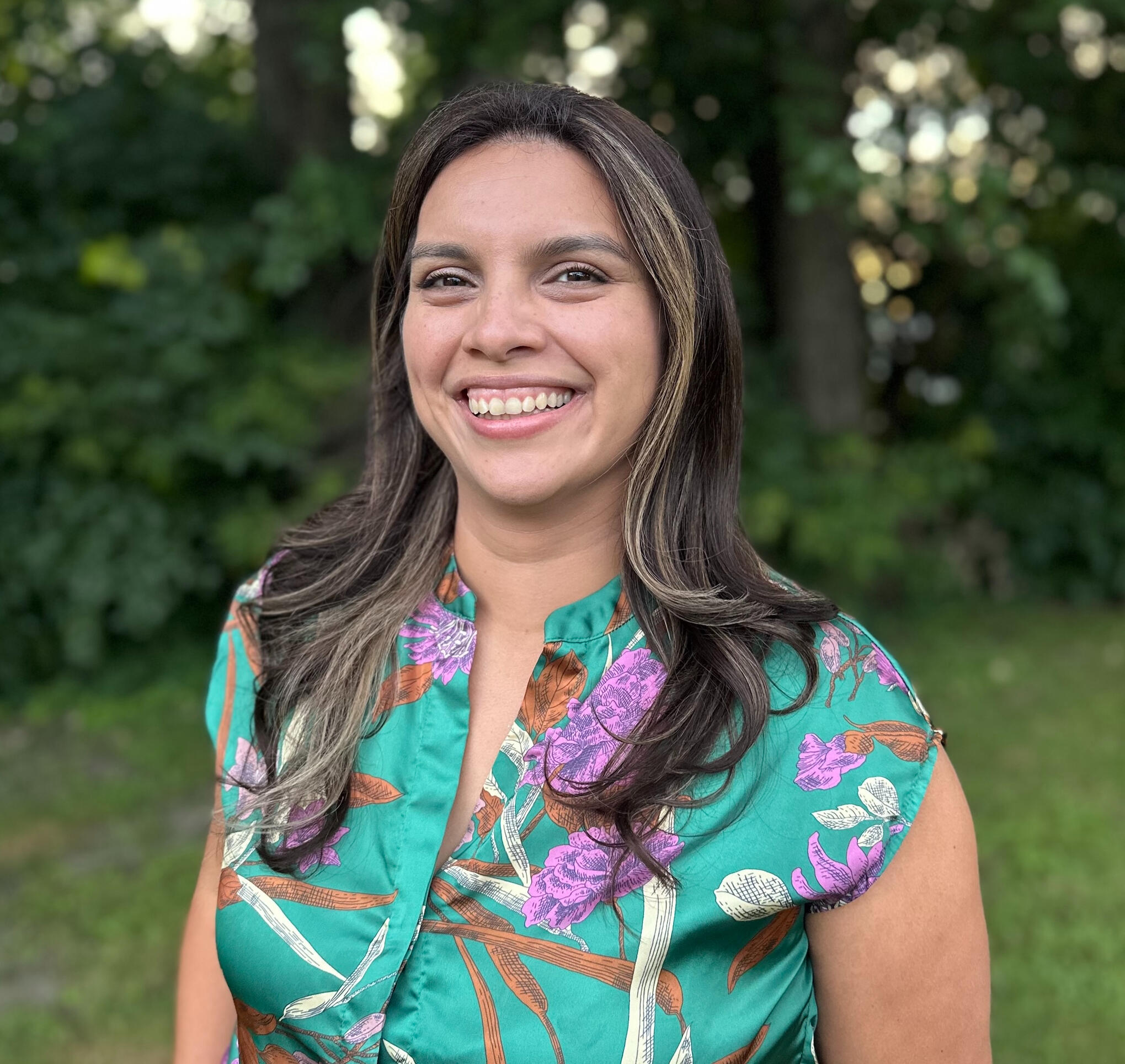
Dra. Nancy Domínguez-Fret
Nancy Domínguez-Fret is a Spanish professor and director of the teacher education program at Northern Illinois University. She has extensive experience teaching heritage Spanish and Spanish as a second language at both the high school and university levels. Her approach to teaching Spanish as a Heritage Language (SHL) focuses on the intersections between critical language awareness and Ethnic Studies.Domínguez-Fret is the daughter of Mexican immigrants from Jalisco, Mexico, originally from the towns of Jamay and Ocotlán. Born and raised on Chicago’s South Side, she is the proud mother of two bilingual MexiRican children. Her personal and professional experiences inform her deep commitment to advancing equitable access to dual-language bilingual education and heritage language education in Illinois.Her research focuses on the linguistic experiences of heritage speakers throughout their educational journey, the role of heritage Spanish courses in the recruitment and retention of Latinx students, and the preparation of future language teachers. She is a co-founder of the UIC Dual Language Bilingual Education Research Collective and provides professional development to educators teaching heritage Spanish and dual-language bilingual education across multiple states.This book was inspired by her experiences with students when she was a high school teacher and by the lack of available curricula that centers the lived experiences of heritage Spanish speakers. Above all, this book was born out of her love for her students and her commitment to critical language education.
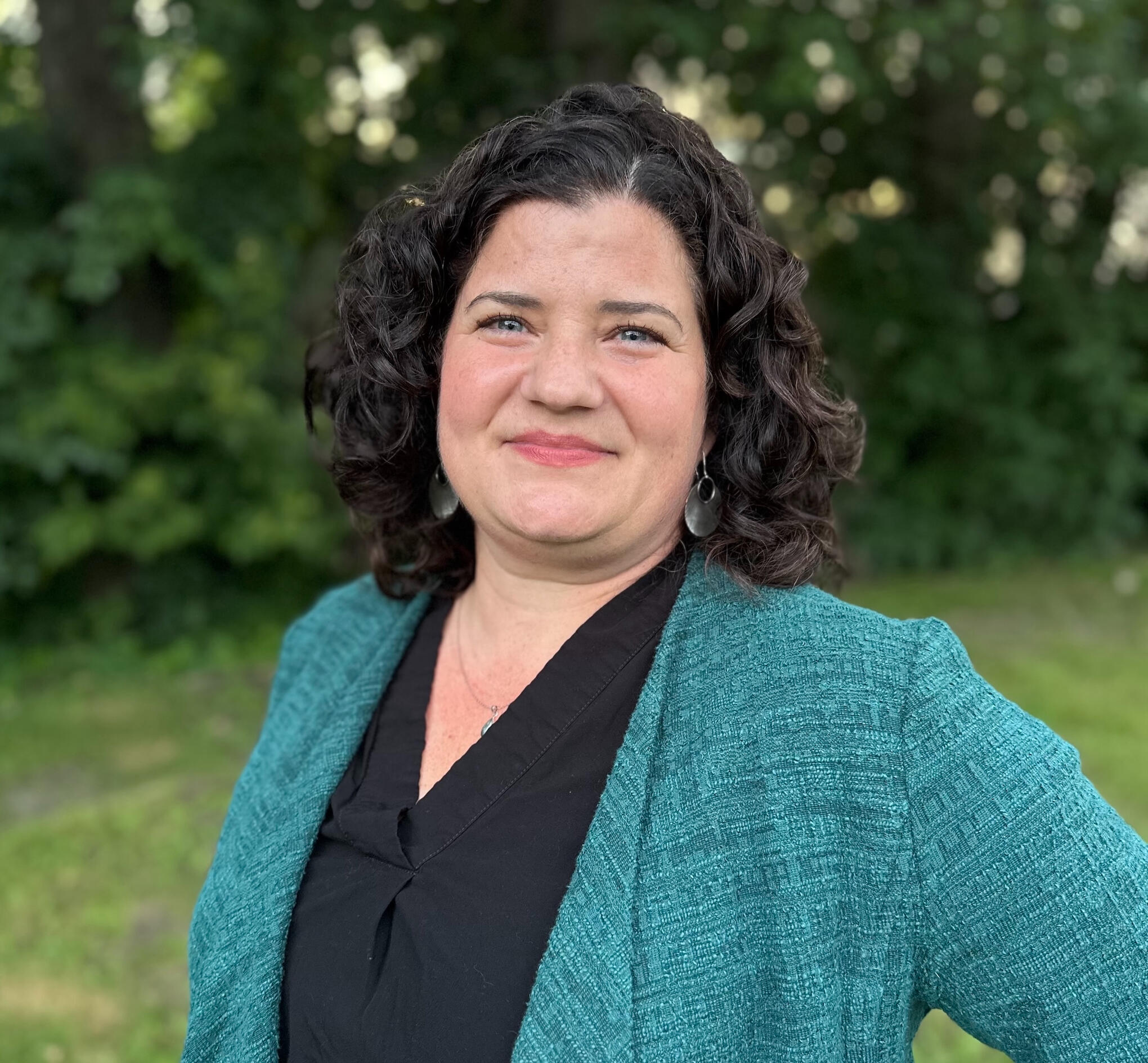
Dra. Megan T. Marshall
Megan is a Spanish professor and coordinator of the Spanish for Heritage Speakers program at the University of Chicago. Before joining UChicago, she earned a Ph.D. in Hispanic Linguistics from UIC, where she taught in the Spanish for Heritage Speakers program for 10 years. Her research focuses on understanding the role of social contexts and sociocultural factors that influence the maintenance and acquisition of Spanish in communities across the United States. As both a professor and the mother of two heritage Spanish-speaking daughters, she is deeply committed to creating social contexts that nurture positive identities and support the natural multilingualism found in bilingual communities.Megan is proudly from Chicago’s South Side, where she developed a meaningful connection to Spanish and the Spanish-speaking community from a young age. Although her parents did not speak Spanish, the language was a constant presence throughout her life. Surrounded by Spanish-speaking friends, neighbors, and classmates, Spanish has always been part of her world. Her experience learning a second language within a social context has greatly influenced her approach to teaching, with a clear focus on encouraging students to use Spanish for a variety of purposes and in diverse contexts.For Megan, it is clear that languages are learned and maintained through use—and that people use language when they have a desire to communicate and connect with others. From this perspective, the classroom serves as a space for students to develop the linguistic and sociolinguistic tools they need to establish and strengthen connections with other Spanish speakers.Participating in this project has been, above all, an expression of gratitude toward her students and the Spanish-speaking communities that have welcomed her throughout her life. Her greatest hope is to share an approach to Spanish language education that honors and celebrates the cultural and linguistic richness of her students and of Spanish-speaking communities throughout the United States.
Have a Question? Let’s Connect.
Have questions about the textbook, interested in using it for your course, looking for consulting services, or simply want to learn more about the project? We’d love to hear from you.
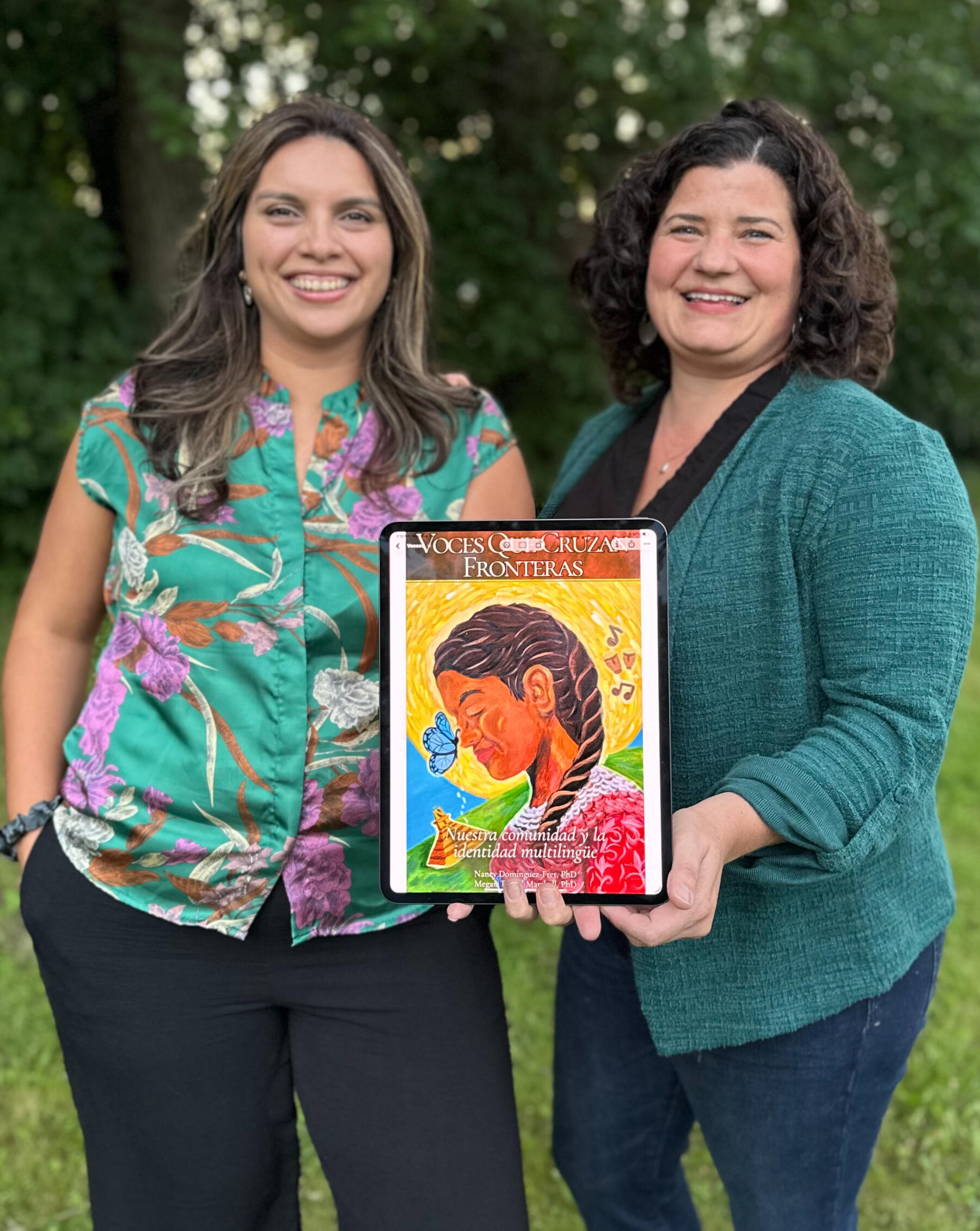
Consulting Services
Spanish as a Heritage Language Program DevelopmentWe partner with schools and districts to develop, strengthen, and expand Spanish as a Heritage Language (SHL) programs that respond to the linguistic, cultural, and academic needs of heritage language learners. Our consulting services support programs at every stage of development—from initial planning to districtwide implementation and long-term growth.Our services include:
• Strategic planning for program development and growth
• Multi-level program design and expansion
• Coordination and alignment across schools and districts
• Short- and long-term planning for sustainable program growth
• Alignment with state Spanish Language Arts and World Language Standards
• Curriculum and program alignment across grade levels
• Customized action plans based on each school or district's unique context and goals
• Support for building sustainable pathways for Spanish heritage language learnersProfessional Development WorkshopsOur professional development workshops bridge current research and theory with practical classroom application. We work with educators to develop the knowledge, tools, and instructional practices needed to create linguistically and culturally sustaining learning environments for Spanish heritage language learners.Workshop topics include:
•Translanguaging: Theory and Classroom Practice
•Understanding and Affirming Language Variation
•Teaching Grammar in Context
•Culturally and Linguistically Sustaining Teaching Practices
•Ethnic Studies in the Spanish as a Heritage Language Classroom
•Developing Heritage Language Literacy: Reading and Writing
•Family and Community Engagement in the SHL ClassroomCustomized Workshops
All workshops can be customized to meet the specific needs, goals, and contexts of individual schools, districts, or organizations. We offer professional learning experiences ranging from single workshops to multi-session professional development series designed to support sustained educator growth and program development.
Foreword by
Dr. Angélica Amezcua
Uno de los académicos más influyentes en el campo de la educación del español como lengua de herencia, el Dr. Glenn A. Martínez (2025), escribió recientemente que “[t]he revolution that an integration of the local in Spanish language can provide is needed now more than ever” (p.373). La Dra. Nancy Domínguez-Fret y la Dra. Megan Tzeitel Marshall no solo logran ejemplificar magistralmente cómo localizar el español en ambas partes de Voces que Cruzan fronteras: Nuestras comunidades y la identidad multilingüe, sino que también muestran cómo se ve un currículo que centra las experiencias y necesidades de lxs estudiantes latinxs.Primero, el libro destaca por su profundo compromiso con la comunidad y por la manera en que incorpora voces locales en el proceso de aprendizaje a través de enfoques críticos para el diseño de la educación del español como lengua de herencia. Este recurso centra las voces Latinas y fomenta la agencia estudiantil al colocar sus experiencias de vida en el centro del currículo. Cada capítulo incluye materiales y lecturas que resaltan las experiencias y trabajos de profesorxs, estudiantes y activistas con fuertes vínculos con Chicago y las comunidades Latinas del estado de Illinois. Particularmente valiosa es la inclusión de testimonios, entrevistas y trabajos realizados por estudiantes de Northern Illinois University y la University of Chicago. Asimismo, las autoras ofrecen también ejemplos personales que sirven como modelos para que lxs estudiantes desarrollen sus propios proyectos y reflexiones. Estos trabajos modelo permiten que lxs estudiantes conozcan mejor a las autoras y comprendan las experiencias que han influido en sus trayectorias personales y profesionales. Por ejemplo, aprendemos que el abuelo de la Dra. Nancy Domínguez-Fret fue un trabajador bracero.Las tareas también invitan a lxs estudiantes a interactuar con integrantes de sus comunidades, fortaleciendo los vínculos con sus comunidades y reconociendo el valor de los conocimientos y experiencias de las personas que forman parte de ellas, cuyos conocimientos y experiencias necesitan incluirse en el salón de clase. De esta manera, el aprendizaje del español deja de limitarse al salón de clase y se convierte en una herramienta para documentar experiencias, construir conocimientos colectivos y valorar las historias de las comunidades Latinas. En este momento en que muchas veces las narrativas sobre las comunidades inmigrantes son producidas a partir de perspectivas deficitarias y externas, este OER nos recuerda la importancia de elevar las experiencias, perspectivas y realidades locales.Segundo, a través de los materiales, actividades y tareas, las autoras demuestran la importancia de implementar un enfoque interdisciplinario en las clases de español para resaltar la resiliencia, la lucha y las contribuciones de las comunidades Latinas en Estados Unidos y, en particular, en el estado de Illinois. Cada capítulo integra temas relacionados con la identidad, el significado de la raza y la etnicidad, las jerarquías raciales, el colorismo, la resiliencia de las comunidades afrolatinas e indígenas, los movimientos sociales, el arte, la música, las ideologías lingüísticas y la gentrificación, permitiendo que lxs estudiantes fortalezcan sus habilidades lingüísticas mientras analizan cuestiones sociales y culturales complejas.Además, ambas partes, FLSP 215: Spanish for Heritage Speakers I y FLSP 315: Spanish for Heritage Speakers II, incorporan un equilibrio efectivo entre actividades de lectura, escritura, comprensión auditiva, discusión y pensamiento crítico, lo que favorece un aprendizaje integral y significativo. Esta diversidad permite que lxs estudiantes desarrollen diversas competencias lingüísticas y académicas. Más importante aún, este enfoque demuestra que aprender español no consiste únicamente en adquirir estructuras gramaticales o ampliar el vocabulario, sino en utilizar su español y habilidades bilingües como herramientas para analizar inequidades sociales y reconocer las contribuciones históricas y actuales de las comunidades Latinas.
Tercero, este OER tiene un enfoque inclusivo e interseccional. Las autoras presentan la diversidad de las comunidades Latinas de manera compleja y matizada, destacando las contribuciones y colaboraciones con otros grupos resilientes. Por ejemplo, en la unidad dedicada a los movimientos sociales, las autoras incluyen información sobre las aportaciones de las comunidades filipino-estadounidenses en la lucha de lxs trabajadorxs agrícolas y de las comunidades afroestadounidenses en el Movimiento Chicano.Asimismo, Voces que Cruzan fronteras: Nuestras comunidades y la identidad multilingüe incluye discusiones sobre lenguas indígenas como el guaraní y el náhuatl, así como el ejemplo de la educación multilingüe en Guatemala. Este enfoque permite que lxs estudiantes comprendan cómo las identidades lingüísticas, raciales, étnicas y culturales se interrelacionan y moldean las experiencias de las comunidades Latinas. Al centrar testimonios, experiencias vividas y contribuciones de estudiantes, académicxs y activistas, el OER promueve una representación auténtica y significativa que permite que lxs estudiantes se vean reflejadxs en este recurso educativo abierto. Más allá de la representación, el libro desafía narrativas homogéneas sobre la latinidad y demuestra que las comunidades Latinas están conformadas por múltiples historias, lenguas, trayectorias migratorias y experiencias raciales cuyas huellas siguen presentes en las realidades actuales de las comunidades, ya sea en el sistema educativo, en la lucha de lxs trabajadorxs agrícolas, en el arte, en la música, entre otros ámbitos.Finalmente, como señaló Maya Angelou, “people will forget what you said, people will forget what you did, but people will never forget how you made them feel”. Por ello, lo que distingue a este recurso no son únicamente sus materiales cuidadosamente seleccionados y diseñados ni sus innovadoras actividades pedagógicas, sino la manera en que hace sentir a lxs estudiantes. Este tipo de currículo tiene el potencial de hacer que lxs estudiantes se sientan valoradxs e incluidxs. Les comunica que sus historias, sus familias, sus comunidades, sus luchas y sus prácticas lingüísticas tienen un lugar legítimo dentro de la universidad. En este sentido, Voces que Cruzan fronteras: Nuestras comunidades y la identidad multilingüe ejemplifica la revolución que Martínez (2025) describe, donde la educación lingüística demuestra que el aprendizaje más significativo ocurre cuando lxs estudiantes pueden conectar el contenido con sus propias experiencias y el currículo fomenta la pertenencia, el pensamiento crítico social y el orgullo comunitario.Felicidades a la Dra. Nancy Domínguez-Fret y a la Dra. Megan Tzeitel Marshall por crear Voces que Cruzan fronteras: Nuestras comunidades y la identidad multilingüe, un recurso elaborado con profundo compromiso y cariño para nuestrxs estudiantes de herencia.
INTRODUCTION
¿PARA QUIÉN ES ESTE LIBRO?
This book was designed for Spanish heritage-speaking students, those students whose connection to Spanish is primarily rooted in their homes and communities resulting in significant political and sociocultural ties to the language. For these students, Spanish represents much more than an additional language they can use for work or play. For heritage speakers, Spanish is an invaluable resource that allows them to connect with their families, communities, and cultural background; it is their cultural and linguistic inheritance (Amezcua, 2019). We strongly believe that any implementation of heritage language curriculum must begin with an understanding of our students' explicit right to engage with and preserve this inheritance as they see fit. By the very nature of their language experience, heritage-speaking students enter our classrooms with a broad range of Spanish language practices and experiences. With this in mind, a central aim of this two-part book is to support the continued development of heritage speakers’ Spanish literacy while also fostering linguistic confidence through the cultivation of strong identity formation and critical awareness of their heritage language.BRIDGING CRITICAL THEORIES TO PRACTICE: CRITICAL LANGUAGE PEDAGOGY (CLP)
We join Claudia Holguin (2018) and others (see Del Valle, 2014; Leeman, Rabin, and Román Mendoza 2011; Leeman and Serafini 2016; Loza 2017; Martínez 2003; Parra 2016) in proposing a critical approach to the design of Spanish as a Heritage Language (SHL) education. We aim to integrate students' lived experiences and create space to reflect, analyze, and collectively build a critical understanding of the roles that race, identity, social class, immigration, and social justice play in how language is understood and used in their communities and the world. In addition to critical language pedagogy (CLP), our curriculum draws on theories of Place-Based Education and Critical Sociocultural Linguistic Literacy (CriSOLL). While grammar and accuracy are not the primary drivers of our curriculum we rely on the ACTFL proficiency guidelines as a frame for our students to measure their individual growth according to their own language development goals.In our implementation of CLP we prioritize centering U.S. Latinx voices featuring literary works by U.S. Latina/o/x authors and historical events and movements like the Chicano Movement of the 1960s, that are often excluded from traditional Spanish language textbooks. We seek to promote student agency by placing their life experiences at the core of the curriculum while also helping them develop the tools and skills to identify and resist the harmful socio-political and cultural ideologies and practices that position their language and culture as deficient.We also offer students the opportunity to explore themes that center their lives and those of other US Latina/o/x community members. Some of the topics we explore are US Latina/o/x Identity, the History of Spanish in the U.S., Spanish Language Variation, Activism in Latinx communities, Immigration, Race and Latinidad, Music, Art and Theater as a Form of Resistance and Cultural Pride, and Spanish in their Future and Careers.Explicit grammar instruction is not a primary focus of this text as there is little evidence for its efficacy in heritage language instruction. In our own classrooms, we have found that it often undermines students' growth and investment in their heritage language with very little pay-off in terms of language development. Time and again, we have found that grammar is most likely to "stick" when taught in context and as needed to support students' own communicative goals. In this book, we approach grammar as a contextualized practice to support the development of students’ Spanish literacy skills while doing our best to avoid unnecessary grammatical jargon. While each chapter includes a grammar and orthography section, these are intended to serve as flexible resources rather than the primary focus of instruction. In taking this approach, we are intentionally choosing to prioritize our students' investment in Spanish, which has been shown to be strongly correlated to language proficiency among heritage speakers of Spanish (Marshall, 2026).PLACE-BASED EDUCATION: DEL BARRIO PARA EL BARRIO
This textbook draws on place-based education, which positions local communities and lived experiences as powerful sources of knowledge. Place-based education is an umbrella term that refers to pedagogical practices that center the local community, environment, culture, and students' lived experiences as the foundation for meaningful and relevant teaching and learning. One of the goals of place-based learning is to foster civic engagement by helping students develop a deep sense of belonging, collective responsibility, and a commitment to improving the well-being of their communities, not just their own individual interests (Yemini et al., 2025). We believe that U.S. Latinx history matters and should be at the core of the curriculum. The textbook invites students to explore and reflect on local issues affecting U.S. Latino/x communities, highlighting grassroots activism and meaningful ways to get involved and give back within communities across Illinois. It also makes connections between these topics and their impact on Latinx communities beyond the United States.Each chapter features an oral history connected to the unit’s theme, drawn from conversations with Chicago area professors, community activists, and community members who generously share their stories and expertise. In addition, every chapter includes lecturas written by local professors, students, and members of the Latinx community with strong ties to Chicago and the Spanish language. It also features work by Northern Illinois University and University of Chicago students, including testimonios (stories of growing up bilingual), poems, and oral history interviews.The curriculum also documents the history of Latinx student activism at Northern Illinois University, particularly their efforts in establishing the Undocumented Student Resource Center and the Latino Center. As part of these courses, students engage in paseos to these centers to learn about this history and its connection to our identity as a Hispanic-Serving Institution (HSI). Part of the responsibility of an HSI is to serve Latinx students, and we see Spanish for Heritage Language (SHL) courses as part of this effort to truly support their academic and linguistic needs, in partnership with existing institutional resources. We invite teachers and professors to visit and engage with institutional centers and resources on their own campuses, and to explore local histories of activism in their contexts and meaningfully incorporate them into their instruction.The grammatical and orthographic points included in each chapter reflect what has been effective for the student population we currently serve; however, different learning contexts may call for different topics—or none at all. We placed these sections at the end of each chapter, but encourage educators to use them throughout the chapter when appropriate. We strongly encourage all instructors to evaluate and develop activities that respond to their students’ needs and adapt these sections accordingly, using them as a guide to support students in continuing to develop their heritage language with confidence.LINGUISTIC AND SOCIAL JUSTICE STANDARDS
The majority of our student community enters our SHL classroom with an Advanced Low level of proficiency. This textbook uses a broad range of styles (different ways of languaging), genres (e.g., fiction, nonfiction, oral histories, testimonios), and text types (e.g., narrative, argumentative, and expository texts) to support students’ development toward the Advanced High and Superior proficiency levels through learning objectives in the form of Can-Do Statements. These learning objectives were informed by the ACTFL Proficiency Standards and the Critical Sociocultural Linguistic Literacy (CriSoLL) framework.CriSoLL, as proposed by Claudia Holguín Mendoza is a critical pedagogy-based approach rooted in sociolinguistic justice that aims to increase students’ critical language awareness and linguistic agency. Holguín Mendoza (2022) calls on SHL educators to reimagine language assessment to prioritize critical pedagogies and sociolinguistic justice. Centering student agency, she proposes a CSLL-based rubric that recognizes heritage speakers’ linguistic knowledge and supports student self-reflection on their critical literacy development. CriSoLL in no way suggests that students should not or will not learn standardized or prestige varieties of Spanish. Crucially, however, it requires students (and instructors) to simultaneously develop a critical awareness of the privileged status of these varieties and the white logic that underpins it. Beyond language proficiency, these learning objectives aim to measure critical consciousness and critical literacy.Using a backwards design approach, texts and materials were carefully selected to support this progression of both proficiency and critical engagement. We encourage teachers to differentiate instruction based on their student community and adapt activities with scaffolding and support. The content of each unit is organized around essential questions designed to encourage students to explore different aspects of their lives and communities. Drawing on Holguin Mendoza’s CSLL-based rubric as a model, each unit includes a self-assessment tool for students to measure growth in both language and critical literacy.THROUGHOUT THESE CHAPTERS, STUDENTS WILL HAVE THE OPPORTUNITY TO:• Conduct independent research using both primary and secondary sources• Describe in detail important people, relationships, places, and events• Narrate significant personal, cultural, and historical events• Compare and contrast ideas, texts, or concepts and share opinions and perspectives based on their own lived experiences• Synthesize information from a variety of sources to prepare multimodal projects regarding complex ideas• Plan and prepare oral presentations engaging complex ideas or concepts• Identify arguments, including both main points and supporting details• Infer meaning and analyze the author's use of language to communicate across a variety of text types• Understand and apply specialized vocabulary in written and oral language• Present, develop, and defend arguments with clear main points and supporting evidence• Analyze, discuss, and explain complex social, political, and academic topics• Evaluate and compare multiple viewpoints or opinions• Develop and propose solutions to complex social, political, and academic issuesWe believe language should promote social justice, helping students critically understand the world, recognize inequities, and communicate inclusively. Therefore, we have also aligned this curriculum with the social justice standards.We end this introduction with the following quote from Gloria Anzaldúa, as we believe that SHL courses should be spaces where students’ languages, identities, histories, and lived experiences matter, belong, and are celebrated.“Chicanos who grew up speaking Chicano Spanish have internalized the belief that we speak poor Spanish. It is illegitimate, a bastard language. we use our language differences against each other. Repeated attacks on our native tongue diminish our sense of self. So, if you want to really hurt me, talk badly about my language. Ethnic identity is twin skin to linguistic identity—I am my language.”
Peer Reviews
The text does an excellent job of positioning students as contributors to knowledge rather than simply consumers of information. Across the modules, students are invited to connect course concepts to their own experiences, families, neighborhoods, and communities through oral histories, interviews, reflection activities, and community-based projects. Rather than treating culture as something distant to be studied, the text encourages students to recognize the value of their own linguistic and cultural knowledge. I especially appreciated the emphasis on local histories, community experiences, and the voices of individuals whose stories are not always represented in traditional instructional materials. The text is relevant, meaningful, and affirming while also encouraging students to engage critically with complex social and cultural issues.
-Dr. Brianna Butera, Instructor
This OER incorporates inclusive examples and perspectives, and I particularly appreciate the intersectionality that is incorporated in each unit. For example, it highlights the contributions of the Pilipino-American and African-American communities in the Chicano Movement. Through its focus on community voices, testimonios, and contributions from Latinx students, professors, and activists, the OER promotes representation and centers culturally diverse experiences in a meaningful and authentic way. This inclusive approach supports students in seeing themselves and their communities reflected in the OER.
-Dr. Angélica Amezcua, Instructor
The framework using Linguistic and Social Justice Standards is innovative and necessary. Overall, the textbook communicates complex topics respectfully and effectively without essentialzing or over-simplifiying. The introductions to each chapter are consistent and the framing questions, learning goals, brief description, and "normas de justicia social" map out each chapter effectively. The vocabulario sections are all also excellent and the repaso gramaticales are brief, to the point, pedagocially appropriate, and well-contextualized. The use of testimonio as an ongoing structure, pedagogy, and theme is innovative and well-executed. The term and history of the term are well-explained and the use of testimonio throughout the textbook is really well-done and consistent. It provides excellent modeling for the unit project that the students must produce.
-Dr. Lillian Gorman, Instructor